
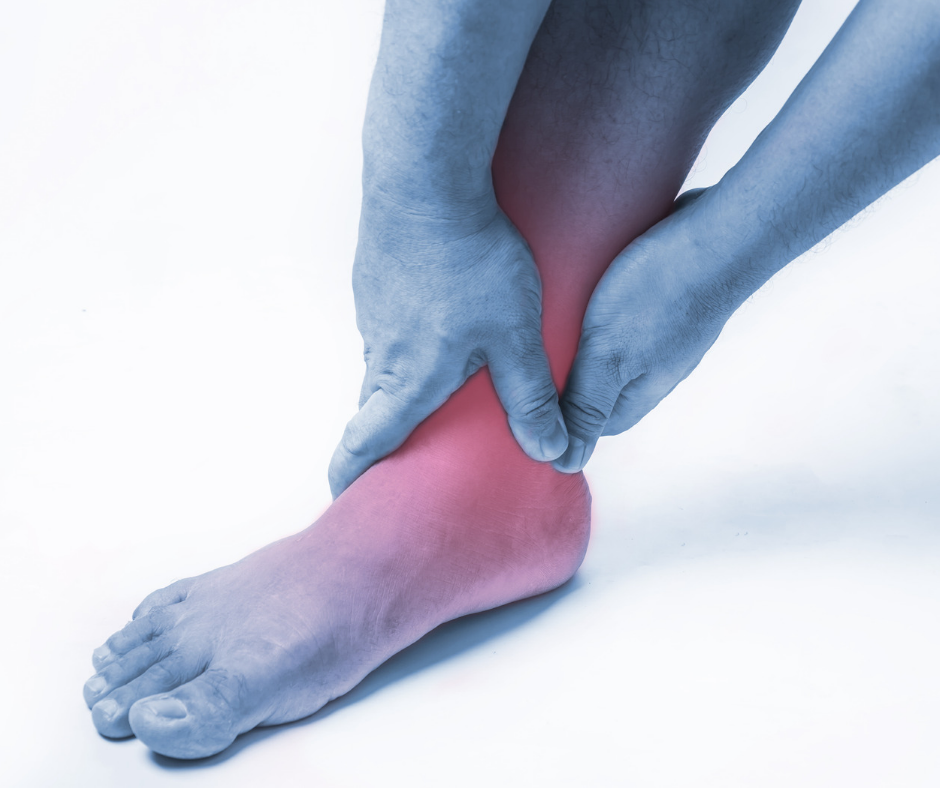
Pain behind the ankle can make stairs, walking, and even the back of your shoe uncomfortable. Two possible sources are Achilles tendinitis and heel bursitis. Although they affect structures in the same general area, they are not the same problem.
At Syracuse Podiatry in East Syracuse, we help patients determine what is causing pain near the back of the heel and recommend treatment based on the affected structure.
What Does Achilles Tendinitis Feel Like?
The Achilles tendon connects the calf muscles to the heel bone and helps lift the heel when you walk, run, or climb stairs. Repetitive stress can irritate the tendon, particularly after a sudden increase in activity.
Symptoms may include:
- Aching or stiffness behind the ankle
- Pain that worsens during activity
- Morning stiffness
- Tenderness along the tendon
- Swelling or thickening
- Discomfort when rising onto your toes
Achilles pain may develop where the tendon attaches to the heel or farther above the attachment point. Learn more about the causes and symptoms of Achilles tendinitis.
How Is Heel Bursitis Different?
A bursa is a small, fluid-filled sac that cushions tissues and reduces friction. Bursitis can develop when a bursa near the back of the heel becomes irritated.
The pain may feel more concentrated near the heel bone and worsen when the back of a shoe presses against the area. Redness, swelling, and tenderness may also occur.
A bony prominence called Haglund’s deformity can increase friction at the back of the heel and contribute to bursitis. Some patients may have irritation involving both the bursa and Achilles tendon.
How Can You Tell Which One Is Causing the Pain?
Location offers clues, but symptoms often overlap. A podiatrist can examine the tender area, test ankle movement and strength, review recent activities, and order imaging when necessary.
Treatment may include activity changes, ice, supportive footwear, heel lifts, stretching, physical therapy, medication, or temporary immobilization. The appropriate approach depends on which structure is irritated and whether another condition is contributing.
Do not continue pushing through worsening pain or sudden weakness. A popping sensation, severe swelling, or difficulty pushing off may indicate a more serious Achilles injury.
If pain behind your ankle is interfering with normal movement or footwear, contact Syracuse Podiatry for an evaluation. Dr. Ryan L. D’Amico, Dr. Donal M. Erickson, Dr. Keith Sherman, and Dr. Colin Kalabanka can provide guidance and support.