
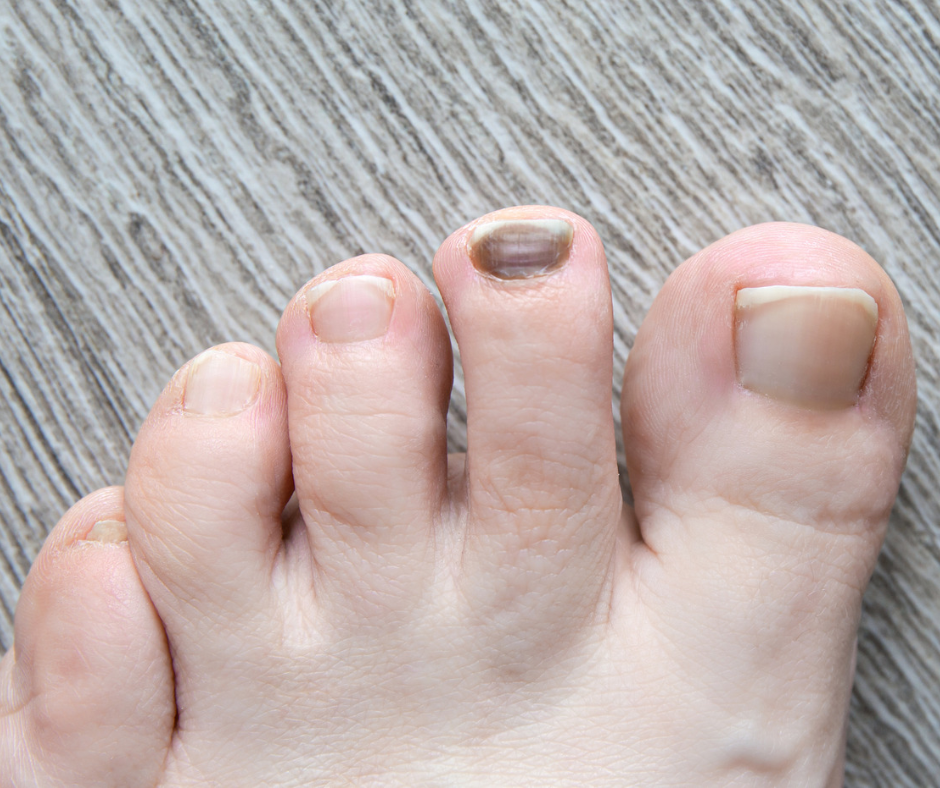
Black nail polish can be removed after Halloween. A toenail that has turned black on its own needs a closer look. While many dark toenails result from bruising or repetitive pressure, discoloration can have several possible causes.
At Syracuse Podiatry in East Syracuse, we help patients determine why a toenail has changed color and whether treatment is needed.
Did You Bruise the Toenail?
A black or dark purple nail commonly develops when blood collects beneath it. This is known as a subungual hematoma. It may follow an obvious injury, such as dropping something on your toe, but repeated contact with the front of a shoe can also cause bleeding beneath the nail.
Runners, hikers, and people wearing shoes that are too short may develop a dark nail without remembering one specific impact. A broken toe can also cause bruising and nail discoloration. The toe may feel tender or throb if pressure builds beneath the nail.
Do not attempt to puncture or drain the nail yourself. Doing so can introduce bacteria and increase the risk of infection.
Could Discoloration Be Toenail Fungus?
Fungal infections can cause yellow, brown, or darker discoloration, often along with thickening, brittleness, crumbling, or separation from the nail bed. Syracuse Podiatry recently discussed additional signs and treatment options for toenail fungus.
Because trauma and fungal infections require different care, appearance alone may not be enough to identify the cause. Other changes in color, shape, or texture may also provide clues about your health.
When Should a Black Toenail Be Evaluated?
Seek care if the discoloration appeared without an obvious injury, is severely painful, or does not begin moving toward the end of the toe as the nail grows. A dark streak or spot that changes, widens, or extends onto the surrounding skin also requires professional evaluation.
Prompt care is especially important if you have diabetes, poor circulation, reduced sensation, drainage, increasing redness, or warmth around the nail.
Depending on the cause, treatment may involve relieving pressure beneath an injured nail, addressing an infection, protecting the toe while it grows out, or further testing.
Do not disguise an unexplained nail change with polish and forget about it. Review more information about blackened toenails or contact Syracuse Podiatry for an evaluation. Dr. Ryan L. D’Amico, Dr. Donal M. Erickson, Dr. Keith Sherman, and Dr. Colin Kalabanka can provide guidance and support.