
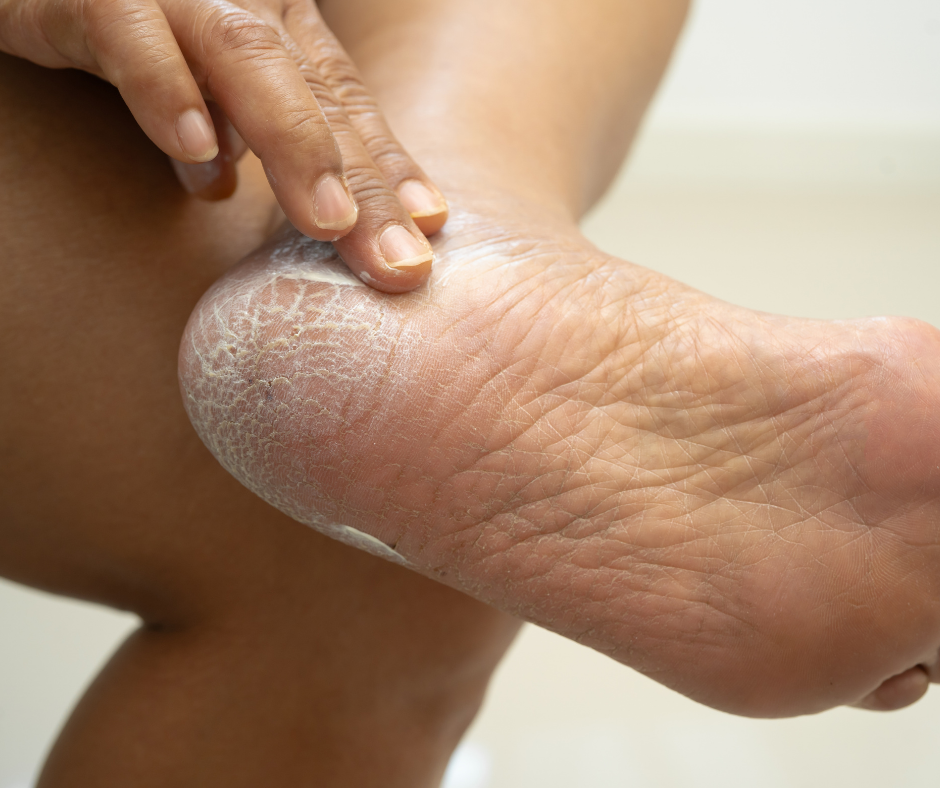
Cracked heels are common, but they can become more than a cosmetic concern. When the skin around the heel becomes dry and thick, pressure from standing or walking can cause it to split. These cracks, also called heel fissures, may become painful and, in deeper cases, increase the risk of infection.
At Syracuse Podiatry, persistent, cracked heels can be evaluated to determine what is contributing to the problem and how to protect the skin.
Why Do Heels Crack?
Dry skin is a major contributor to cracked heels, but several factors can make the problem worse:
- Spending long periods standing or walking
- Wearing open-backed shoes or sandals
- Going barefoot frequently
- Having thick calluses around the heel
- Wearing shoes that do not fit or cushion the heel properly
When callused skin becomes dry and less flexible, it may be more likely to split under pressure. If you tend to develop thick skin during warmer weather, read more about why foot calluses can get worse in the summer.
How Can You Help Prevent Cracked Heels?
A few simple foot-care habits may help keep heel skin softer and reduce the chance of painful fissures:
- Moisturize your heels regularly, especially after bathing
- Wear supportive, well-fitting shoes that cushion the heel
- Limit prolonged use of open-backed footwear
- Avoid cutting or shaving thick skin yourself
- Check your feet for redness, bleeding, or deep cracks
People with diabetes should be especially careful with cracked or dry skin because reduced sensation or circulation can make foot problems harder to notice and slower to heal. Learn more about diabetic foot care and why regular foot checks matter.
When Should You See a Podiatrist for Cracked Heels?
Mild dryness may improve with consistent moisturizing and better footwear. However, heel fissures that are deep, painful, bleeding, recurring, or showing signs of infection should be evaluated by a podiatrist.
If dry skin is accompanied by itching, peeling, or burning, another condition may be involved. Our blog on athlete’s foot in the summertime explains common signs of a fungal infection that can also cause cracked skin.
Syracuse Podiatry can evaluate persistent, cracked heels, address thick calluses, and recommend treatment based on your foot health. Contact us today so Dr. Ryan L. D’Amico, Dr. Donal M. Erickson, Dr. Keith Sherman, and Dr. Colin Kalabanka can help your feet feel their best.