
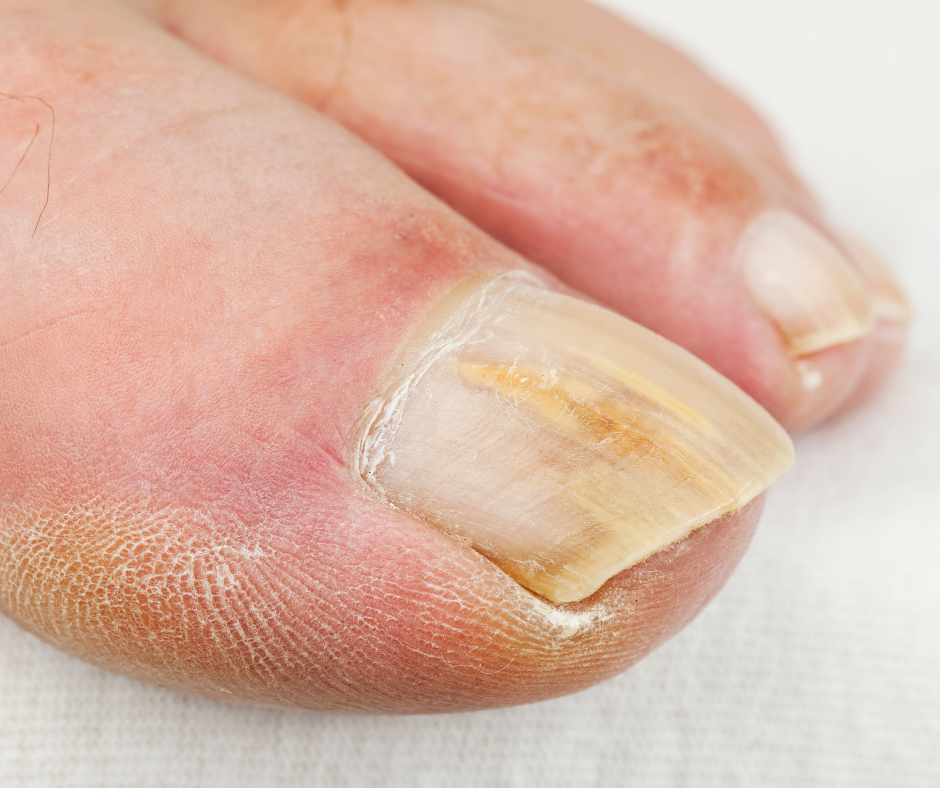
Toenail fungus can leave nails thick, brittle, discolored, or difficult to trim. Summer may increase exposure to environments where fungi thrive, including damp shoes, swimming pools, locker rooms, and communal showers.
Below, the podiatrists at Syracuse Podiatry explain how to recognize toenail fungus, what causes it, and how it may be treated.
What Are the Signs of Toenail Fungus?
- Yellow, white, or brown discoloration
- Thickened or distorted nails
- Brittle or crumbly edges
- A nail that begins separating from the nail bed
- Changes in the nail’s texture or appearance
Because other nail problems can look similar, an evaluation can help determine whether fungus is responsible. Syracuse Podiatry’s Fungal Nails resource provides more information about common symptoms and prevention.
What Causes Toenail Fungus?
Fungi grow well in warm, moist environments. Sweaty shoes and socks can create favorable conditions, while walking barefoot around pools, locker rooms, and public showers may increase exposure. These situations can be especially common during summer, when swimming, traveling, and outdoor activities are part of many people’s routines.
Athlete’s foot can also contribute to fungal nail infections because the fungus affecting the skin can spread to the toenails. Learn more about why athlete’s foot is more common in summertime and how to protect your feet.
How Is Toenail Fungus Treated?
Treatment depends on the severity of the infection. Options may include topical or oral antifungal medications, and in some cases, removal of infected nail material may be recommended. Syracuse Podiatry discusses several approaches in its blog on treatments for toenail fungus.
Treatment can take time because a healthy nail must grow out to replace the damaged portion. An untreated infection may also become harder to manage or spread to other nails.
How Can You Help Prevent Toenail Fungus?
Keep your feet clean and dry, wear breathable shoes, change out of damp socks, avoid sharing nail tools, and wear sandals or shower shoes in communal wet areas. Syracuse Podiatry also offers tips to prevent fungus problems.
For evaluation and treatment of persistent nail discoloration, thickening, crumbling, or other changes, the team at Syracuse Podiatry can help! We provide personalized treatment plans designed to relieve discomfort, improve foot function, and help you stay active for years to come. Contact us today so Dr. Ryan L. D’Amico, Dr. Donal M. Erickson, Dr. Keith Sherman, and Dr. Colin Kalabanka can elevate your foot health and help your feet feel their best.