
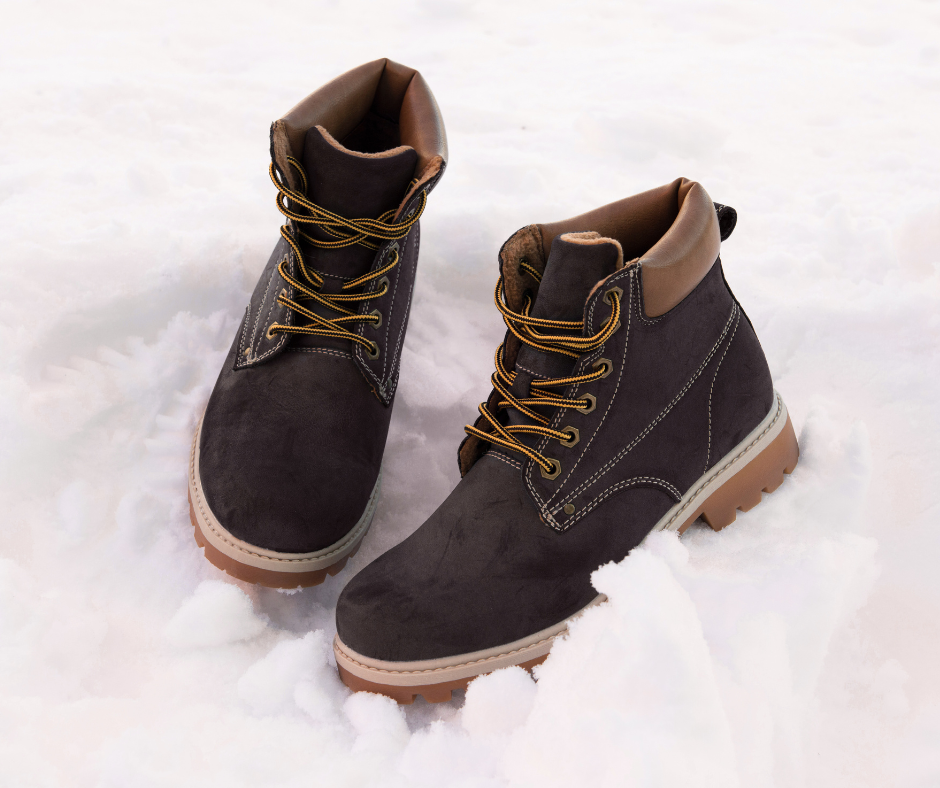
From icy sidewalks to deep snowdrifts, the wrong boot can lead to everything from blisters and nerve compression to debilitating slips and frostbite. To keep your feet healthy this season, you need to match your boot technology to your specific lifestyle. Here’s what we at Syracuse Podiatry recommend in a winter boot as the cold surges on.
The Anatomy of a Safe Winter Boot
First, it’s all about traction. Look for rubber outsoles with deep lugs. These act like winter tires that bite into snow and channel slush away to prevent slipping and falling.
Also, look for waterproofing. Why? Because moisture is the enemy of warmth. Seek out breathable, waterproof membranes like Gore-Tex or treated leather with sealed seams.
Lastly, insulation. Synthetic fills like Thinsulate or PrimaLoft are gold standards because they retain heat even if they get damp. For extreme cold, look for a gram rating. 200g is standard for activity, while 400g is better for standing in deep snow.
Matching Your Lifestyle to Your Winter Boots
If you are a city commuter, you need a balance of traction and breathability. Since you’ll likely be moving between freezing outdoor air and overheated offices, look for mid-height boots with moisture-wicking liners.
Similarly, for any outdoor professionals (like construction workers), durability is key. Avoid traditional steel toes in sub-zero temperatures because the metal acts like a cold sink. Choose composite safety toes instead.
If you’re active or hiking on the weekends, you need ankle stability and a stiff midsole to prevent over-flexing on frozen, uneven terrain.
And for anyone, especially seniors, fall prevention is the priority. Look for boots with a lower center of gravity and easy-entry features like side zippers to ensure a snug fit without the struggle of laces.
Professional Fitting Tips for Winter Boots
To avoid Snowboarder’s Ankle or nerve compression, your fit should be precise. Space is insulation, if you didn’t know, so if your toes are clamped, blood flow stops, and the risk of frostbite increases. Also:
- With the boot unlaced and your foot forward, you should fit one index finger behind your heel. Once laced, you must be able to wiggle all ten toes freely.
- While the toes need room, the heel should be locked. If your heel slips more than a quarter inch, you risk blisters and instability.
- If you use custom orthotics for arch support, make sure the boot has a removable footbed. Orthotics take up vertical volume, which may require sizing up to prevent pressure on the top of your foot.
For advice related to any podiatric concerns you’re facing, the expert team at Syracuse Podiatry is here to help guide you. Contact us today so Dr. Ryan L. D’Amico, Dr. Donal M. Erickson, Dr. Keith Sherman, and Dr. Nicholas Cronin can elevate your foot health and help your feet feel their best.