
The Winter Olympics showcase incredible feats of athleticism, but they also highlight the extreme physical toll these sports take on even the most athletic feet in the world. While we often focus on the spectacular jumps and high-speed runs, the real battle is frequently fought in the feet and ankles.
Here are five common foot and ankle injuries seen across popular Winter Olympic sports, courtesy of Syracuse Podiatry.
1. Alpine Skiing and Tibial Stress
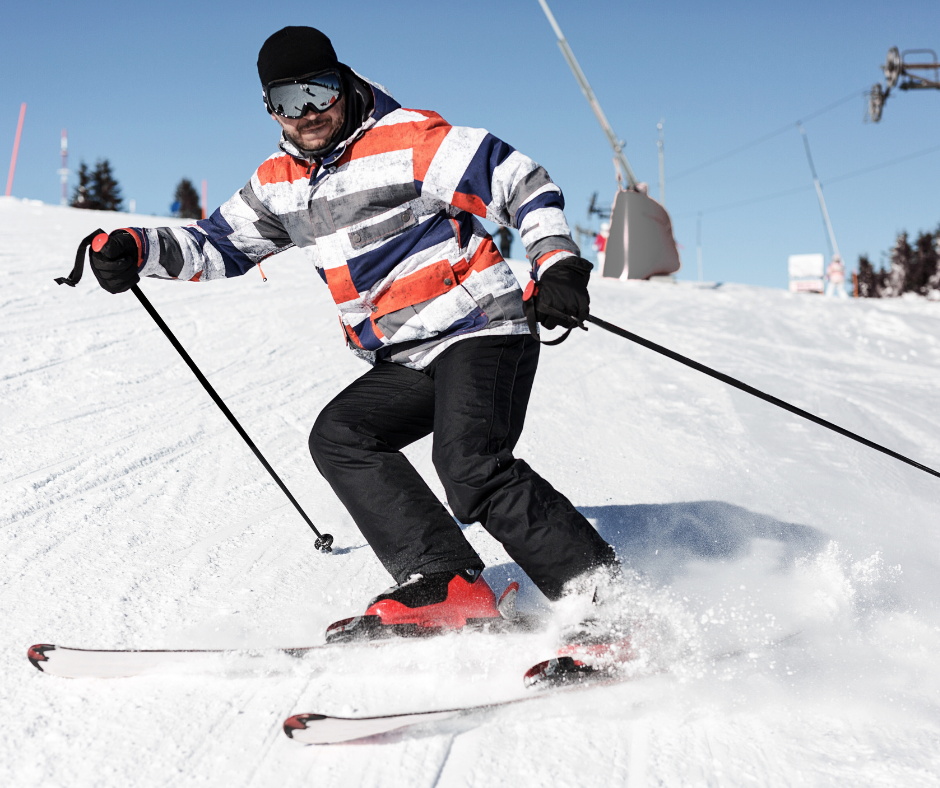
In alpine skiing, your feet are locked into rigid, plastic shells. While this protects you from traditional ankle sprains, it creates a pivot point at the top of the boot that can be painful.
Boot bang occurs when the front of the leg repeatedly slams against the tongue of the boot during high-speed turns or landings. And, because the ankle cannot move, the force of a fall is often transferred upward, which leads to tibial fractures or severe high ankle sprains.
Lindsey Vonn’s crash this year caused a broken leg, and boot bang certainly might have played a role.
2. Cross-Country Skiing and Skier’s Toe
Unlike alpine boots, cross-country boots have a flexible sole and a free heel design. This requires a repetitive kick-and-glide motion that puts a massive amount of stress on your Achilles tendon.
If you are pushing through deep snow or have poor technique, you can develop severe inflammation at the back of the heel. The constant sliding of the foot forward in the boot can also cause Skier’s Toe, where blood pools under the nail from micro-trauma.
3. Snowboarding and Snowboarder’s Ankle
Snowboarding mechanics are entirely different from skiing because both feet are attached to one board. The signature injury here is a fracture of your talus, often called Snowboarder’s Ankle.
This happens during a flat landing where the foot is forced upward and inward. Because this bone sits deep in the ankle joint, these fractures are frequently misdiagnosed as simple sprains.
4. Figure Skating and Lace Bite
Figure skaters perform repeated, high-impact landings on a thin metal blade. The sheer force of landing a triple or quadruple jump can lead to stress fractures in the metatarsals or the bones in the midfoot.
Also, the tight lacing required for stability can cause lace bite, where the tendons on the front of the ankle become inflamed from the constant pressure of the skate’s tongue.
5. Speed Skating and Nerve Compression
Speed skaters stay in a crouched, aerodynamic position for long periods, which puts pressure on the balls of their feet. The extremely tight, carbon-fiber boots they wear can lead to Morton’s Neuroma that causes sharp, burning pain.
The repetitive, rhythmic pushing motion also makes skaters susceptible to deep friction blisters and pump bumps (aka Haglund’s deformity) on the back of the heel.
For advice related to any podiatric concerns you’re facing, the expert team at Syracuse Podiatry is here to help guide you. Contact us today so Dr. Ryan L. D’Amico, Dr. Donal M. Erickson, Dr. Keith Sherman, and Dr. Nicholas Cronin can elevate your foot health and help your feet feel their best.